Is Low-Impact Training Still an Effective Workout?
Oct 1, 2026
by Coach Steph - Stephanie Ward
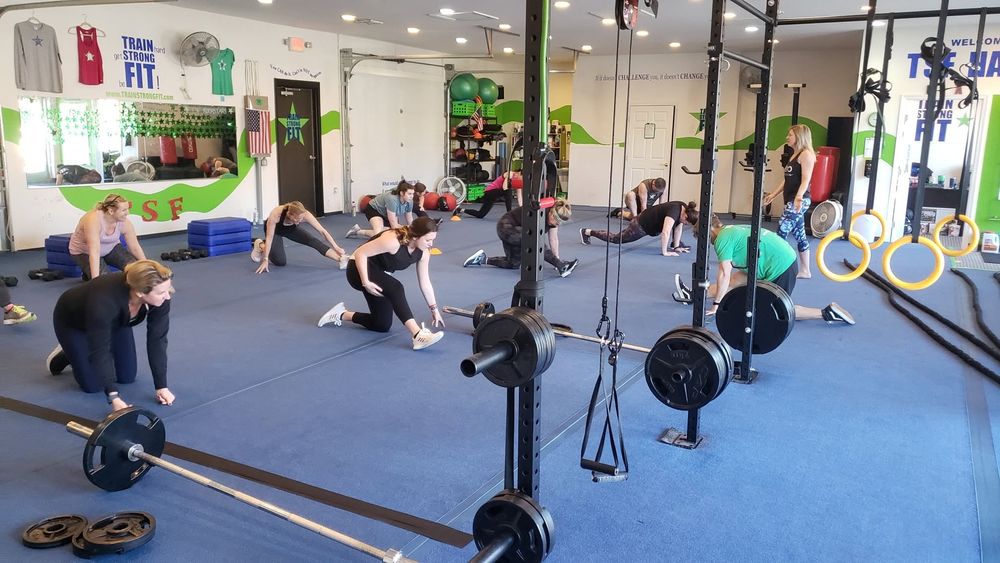
If a workout does not include running, jumping, or burpees, can it still be challenging enough to improve your fitness?
Yes. Low impact describes how much impact a movement places on your body, not how much effort you put into the workout.
A well-designed low-impact program can include resistance training, cardiovascular exercise, balance work, mobility, and progressive challenges. That makes it useful for people who want to get stronger and improve their conditioning without making high-impact movement the center of every workout.
At Train Strong Fit in Ashland, VA, low-impact training uses functional movements, bodyweight exercises, resistance bands, controlled tempos, and mobility work. The class is specifically designed to strengthen and condition the body without running or jumping.
Here is what low-impact training actually means, how it differs from simply taking it easy, and how to decide whether it fits your goals.
Low Impact Does Not Mean Low Effort 💪
The terms impact and intensity are often confused.
Impact describes the physical forces involved when your body contacts the ground or another surface.
Intensity describes how demanding the activity is for you.
A movement can therefore be low impact while still requiring substantial muscular effort.
Consider a controlled squat while holding resistance. Your feet remain on the floor, but your legs still have to produce force.
The same idea applies to resistance band rows, glute bridges, planks, carries, and controlled lunges.
Train Strong Fit's Low Impact Training program incorporates exercises such as bodyweight squats, lunges, glute bridges, band rows, planks, and isometric holds. The emphasis is on controlled movement rather than jumping or sprinting.
That distinction matters because an effective workout does not have to look explosive.
What Can Low Impact Training Actually Improve?
Low-impact exercise is not one single type of workout.
Walking is low impact. Cycling is low impact. Many resistance exercises are also low impact.
That means the benefits depend on what your program actually includes.
Strength
Resistance bands, weights, bodyweight exercises, and isometric movements can challenge your muscles without requiring jumping.
Current CDC guidance recommends muscle strengthening activity for all major muscle groups on at least two days each week for adults.
The important factor is whether your muscles are being appropriately challenged, not whether your feet leave the floor.
Cardiovascular Fitness
Low-impact exercise can also raise your heart rate.
Walking, cycling, swimming, and other continuous activities can provide aerobic exercise without the impact associated with running and jumping.
The CDC recommends at least 150 minutes of moderate-intensity aerobic activity each week for adults, or 75 minutes of vigorous activity, or an equivalent combination.
Balance and Movement Confidence
Exercises performed with control can also challenge stability, coordination, and balance.
These abilities matter both inside the gym and during everyday activities.
Train Strong Fit specifically includes mobility and controlled functional movement in its LIT format, making the program broader than a traditional low-impact cardio class.
Low Impact Versus High Impact Training
Neither style is automatically better.
The right choice depends on your goals, current abilities, preferences, and health considerations.
| Consideration | Low Impact Training | Higher Impact Training |
|---|---|---|
| Jumping and running | Usually minimized or removed | May be included |
| Strength work | Can be a major component | Can be a major component |
| Cardiovascular challenge | Can range from light to demanding | Can range from moderate to demanding |
| Exercise modification | Often easy to scale | May require more substantial modification |
| Useful for beginners | Often | Often, when appropriately coached |
| Required for good fitness | No | No |
You do not need to choose one style forever.
Someone may use low impact sessions as their primary training. Another person may combine them with group training that includes strength, conditioning, agility, mobility, and more demanding cardiovascular work.
The better question is not, "Which workout is harder?"
It is, "Which type of training helps me work toward my goals consistently?"
Who Might Consider Low Impact Training? 🧠
Low impact training can make sense for more people than many assume.
People New to Exercise
If you are starting or restarting fitness, removing jumping and running can allow you to concentrate on learning movements and developing strength at an appropriate pace.
Train Strong Fit describes its LIT sessions as scalable for different fitness levels and says no prior fitness experience is required.
Adults Who Simply Prefer Less Impact
You do not need an injury or medical condition to choose low-impact exercise.
Some people simply prefer controlled strength and conditioning to jumping or running.
That preference is a perfectly reasonable factor when choosing a routine you intend to maintain.
People Balancing Different Types of Training
Low-impact work can also complement other activities.
For example, someone whose week already contains running or another impact-heavy sport might prefer a strength session without additional jumping.
Your total weekly workload matters more than judging one workout in isolation.
People With Joint Symptoms or Health Conditions
This requires more care.
Mayo Clinic notes that strengthening exercises can help support the muscles around joints and lists walking, bicycling, swimming, and water exercise as examples of low-impact aerobic activities that may be easier on joints.
However, "low impact" does not automatically mean that every exercise is appropriate for every painful joint, injury, or medical condition.
If you have arthritis, a current injury, persistent pain, significant mobility limitations, or another health concern, discuss appropriate activity with your health care professional or physical therapist when needed.
A fitness class is not a substitute for rehabilitation or medical care.
What Does a Train Strong Fit LIT Session Include?
This is where the program becomes specific to Train Strong Fit rather than simply another article about low-impact exercise.
According to the current Low Impact Training in Ashland VA program page, LIT uses:
Functional movements
Bodyweight exercises
Resistance bands
Controlled tempos
Mobility work
Strength and stability exercises
The current program page says sessions last approximately 45 to 50 minutes and include a warm-up, low-impact strength and mobility training, and a cooldown.
Train Strong Fit's current Training Options page lists LIT at 10:15 AM on Monday, Wednesday, and Friday.
Because schedules can change, check the current schedule before planning your visit.
How Can a Workout Be Made Harder Without Adding Impact? 🔥
This is one of the most useful concepts to understand.
Jumping higher or moving faster are not the only ways to progress.
Depending on the exercise and your coach's programming, a low-impact movement can become more challenging through:
More appropriate resistance
Additional quality repetitions
Longer controlled working periods
Slower movement tempos
Greater movement control
More challenging exercise variations
Reduced rest when appropriate
Improved range of motion when comfortable
For example, a bodyweight squat may be appropriate for one person.
Another person might perform the same basic movement with additional resistance.
Someone else may use a different variation based on mobility, strength, or comfort.
The movement does not need to become high impact for the training demand to increase.
A Quick Checklist: Is Low Impact Training Right for You?
Ask yourself these questions:
Do I want to improve strength without making running or jumping a major part of my workouts?
Would a controlled and coach-guided environment make exercise feel more approachable?
Am I returning to exercise and looking for scalable movements?
Do I enjoy resistance training, mobility, and functional movement?
Would reducing impact make it easier for me to train consistently?
Do I understand that low impact can still require effort?
If you answered yes to several of these questions, low-impact training may be worth exploring.
If your main goal involves running speed, jumping ability, or preparation for a sport that requires substantial impact, you may also need sport-specific work rather than relying exclusively on low-impact exercise.
Common Mistake: Judging a Workout by How Exhausted You Feel
Sweat, soreness, and exhaustion are easy to notice.
That does not make them the best measurements of workout quality.
Instead, ask:
Am I gradually becoming stronger?
Can I perform movements with better control?
Is my conditioning improving?
Can I handle more appropriate resistance or work over time?
Am I able to train consistently?
Those questions tell you much more about whether your program is moving forward.
Frequently Asked Questions
Can you build strength with low impact exercise?
Yes. Low-impact resistance exercises can challenge your muscles. The program still needs appropriate resistance, progression, and consistency.
Is low-impact training only for older adults?
No. Beginners, experienced exercisers, and people who simply prefer training without running or jumping can all use low-impact exercise.
Is low impact exercise the same as easy exercise?
No. Impact and effort are different variables. Resistance, tempo, repetitions, exercise selection, and other factors can make low impact training challenging.
Is low impact training appropriate if my knees or back hurt?
Possibly, but pain requires individual consideration. Do not assume a class is appropriate simply because it is labeled low impact. Persistent or significant pain should be evaluated by an appropriate health care professional.
You Do Not Have to Jump to Make Progress
Effective exercise is not defined by how dramatic it looks.
A productive workout needs an appropriate challenge, a clear purpose, and a way to progress as your abilities improve.
For some people, that includes running and jumping.
For others, controlled strength, conditioning, and mobility work are a better fit.
If you are looking for a coach-guided way to strengthen your whole body without making running and jumping part of the workout, explore Train Strong Fit's Low Impact Training in Ashland, VA, and check the current class schedule to see whether LIT fits your needs.