How Hard Should Your Workouts Actually Feel? A Practical Guide to Training Intensity
Oct 15, 2026
by Coach Steph - Stephanie Ward
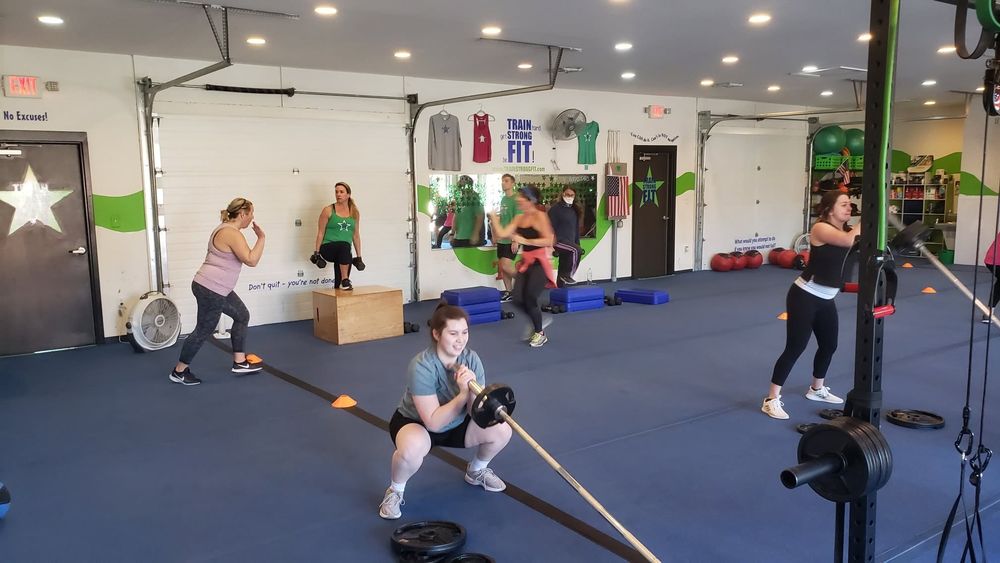
A good workout does not need to leave you collapsed on the floor.
It also should not feel so easy that your body never has a reason to adapt.
So how hard should exercise actually feel?
For most people, the answer changes throughout the workout and across the week. Some work should feel comfortably challenging. Some intervals or sets may feel genuinely hard. Other periods should deliberately feel easier.
The goal is not maximum effort every time you train. The goal is the right amount of effort for what you are trying to accomplish.
Learning to recognize that difference can make your training much more productive.
Harder Is Not Automatically Better
Fitness culture has created some unreliable ways of judging workouts.
How much did I sweat?
How sore am I?
How exhausted do I feel?
Could I barely finish?
Those sensations can occur during training, but none of them proves that a workout was effective.
A strength workout may be productive without leaving you breathless. A conditioning session can improve fitness without requiring maximum effort for 60 minutes. An easier session may be exactly what your program needs between demanding days.
This matters at Train Strong Fit because its Group Training in Ashland, VA combines full-body strength and weight training with cardiovascular conditioning, metabolic HIIT, core work, agility, and mobility. Different parts of that session naturally require different types of effort.
Trying to make every minute equally intense misses the point.
Start With a Simple 0 to 10 Effort Scale 🧠
You do not necessarily need sophisticated equipment to begin understanding workout intensity.
One useful tool is perceived effort.
Imagine a scale from 0 to 10:
| Effort | What It Feels Like | Practical Description |
|---|---|---|
| 0 to 2 | Very easy | Rest or gentle movement |
| 3 to 4 | Easy to moderate | Comfortable, sustainable work |
| 5 to 6 | Moderate | Clearly exercising, but still controlled |
| 7 to 8 | Hard | Requires focus; talking becomes difficult |
| 9 | Very hard | Near maximal effort |
| 10 | Maximum | The hardest effort you can produce |
For aerobic activity, the CDC describes moderate relative intensity as roughly 5 or 6 on a 0 to 10 scale. Vigorous activity begins around 7 or 8.
But there is an important detail.
Your 7 is not necessarily someone else's 7.
The CDC notes that intensity is relative to fitness level. The same activity could feel moderate to one person and vigorous to another.
That is one reason copying the person beside you is a poor way to judge your own workout.
Use the Talk Test During Conditioning
There is an even simpler method for cardiovascular exercise.
Try talking.
During moderate aerobic activity, you should generally be able to talk but not sing comfortably. During vigorous activity, you may only manage a few words before needing to pause for a breath.
This is known as the talk test.
Imagine two hypothetical Train Strong Fit members doing the same conditioning station.
One can hold a full conversation without any change in breathing.
The other can barely say two words.
Even though the exercise looks identical, they are not experiencing the same relative intensity.
The first person may need more challenge if the goal is vigorous conditioning. The second may need to maintain the current level or scale the exercise depending on the session's purpose.
That is where coaching becomes more useful than simply following the person in front of you.
Strength Training Requires a Different Conversation 💪
The talk test works well for aerobic intensity, but strength exercises require you to pay attention to muscular effort too.
Suppose you are doing 10 dumbbell squats.
If repetition 10 feels almost identical to repetition 1 and you could comfortably perform many more, the resistance may eventually need to increase.
If your technique deteriorates halfway through the set, adding more weight probably is not the answer.
A useful strength set should challenge you without requiring you to sacrifice the intended movement simply to finish.
This connects directly with Train Strong Fit's Personal Training in Ashland, VA, where the current program describes customized workouts, technique instruction, progress tracking, and adjustments as members progress.
The resistance should serve the exercise.
The exercise should not become a battle to survive the resistance.
What Should a Well-Structured Workout Feel Like?
Not every workout follows the same format, but consider this hypothetical 50-minute training session.
First 10 Minutes
You warm up and practice movement patterns.
Effort: 2 to 4 out of 10.
You should feel warmer and more prepared, not exhausted, before the main work begins.
Strength Work
You perform several resistance exercises.
Effort: Variable.
The first repetitions of a set may feel controlled. Later repetitions should require more concentration if the resistance and repetition target are appropriate.
Technique remains the priority.
Conditioning
Your heart rate and breathing increase.
Effort: Perhaps 5 to 8 depending on the workout.
Hard intervals may alternate with easier recovery periods.
Cooldown and Transition
Effort decreases again.
The workout has a shape rather than one continuous red line.
That is an important concept:
Good training manages intensity. It does not simply maximize it.
Why You Should Not Train at Maximum Effort Every Day
Hard training has a place.
So does recovery.
Current CDC recommendations call for adults to accumulate at least 150 minutes of moderate-intensity aerobic activity per week, or 75 minutes of vigorous activity, or an equivalent combination, plus muscle strengthening activity on at least two days. Those recommendations allow intensity to be distributed rather than requiring every activity to be vigorous.
ACSM's updated 2026 resistance training guidance reinforces another useful point. Consistency matters more than unnecessarily complicated programming. Its evidence review drew on 137 systematic reviews involving more than 30,000 participants.
You do not earn extra credit for turning every workout into a test of maximum capacity.
Training should be challenging enough to create adaptation and sustainable enough that you can return and train productively again.
A Better Way to Judge Whether a Workout Was Productive 📋
After your next session, stop asking only, "Was that hard?"
Ask these questions instead:
Did I understand the purpose of today's workout?
A strength-focused session should not be judged by the same standard as conditioning.
Did the exercises challenge me at my current ability?
Too easy indefinitely can limit progression. Too difficult can interfere with movement quality.
Could I maintain appropriate technique?
Difficulty that immediately destroys your movement is not necessarily useful difficulty.
Did I adjust when necessary?
Changing resistance, repetitions, pace, or an exercise variation is training intelligently, not failing.
Am I recovering well enough to train consistently?
One spectacular workout followed by several missed sessions is rarely a better strategy than repeatable training.
Am I progressing over time?
Look across weeks, not just one Tuesday.
Train Strong Fit's current group training program specifically describes scalable programming for beginners and returning clients, while its personal training service uses individualized plans and ongoing adjustments.
That is the context in which intensity becomes useful.
Three Common Intensity Mistakes
Mistake 1: Trying to Match the Fittest Person in Class
Someone else's pace tells you very little about the appropriate pace for you.
Fitness history, exercise experience, recovery, and current ability all affect relative intensity.
Use the people around you for community, not as your personal speedometer.
Mistake 2: Thinking Modifications Make the Workout Less Legitimate
A modification can preserve the purpose of an exercise.
Changing a movement so you can perform it with appropriate control may produce a better training stimulus than struggling through the original variation.
Mistake 3: Treating Every Day Like a Personal Record
Some sessions will feel excellent.
Others will happen after poor sleep, a stressful workday, or a demanding week.
Your training plan needs enough flexibility to accommodate being human.
One workout is a data point, not a verdict.
When Should You Tell Your Coach Something Feels Wrong?
Challenge and pain are not synonyms.
Muscular effort, heavier breathing, and temporary fatigue can be normal parts of exercise. Sharp pain, chest pain, faintness, or other concerning symptoms should not be treated as signs that you simply need to push harder.
Communicate with your coach when something does not feel right.
People with chronic medical conditions, symptoms, or concerns about vigorous exercise may also need guidance from an appropriate health care professional before increasing intensity.
FAQs
Should every workout feel hard?
No. Training intensity should reflect the purpose of the session, your program, and your current condition. Easier work and recovery can be intentional parts of a well-designed routine.
Is sweating a sign of a good workout?
Not by itself. Sweat is part of your body's temperature regulation and varies considerably between people and environments. Judge training by its purpose and progression rather than the amount of sweat on your shirt.
How do I know whether cardio is moderate or vigorous?
A simple option is the talk test. During moderate-intensity activity, you can generally talk but not sing. During vigorous activity, saying more than a few words without pausing for breath becomes difficult.
Should beginners train less intensely?
Beginners need an appropriate challenge, not necessarily an easy workout. Exercise selection, resistance, pace, and volume can all be adjusted to create a productive session for the individual's current ability.
Train With Purpose, Not Just Effort
The question is not, "How exhausted can I make myself today?"
It is, "What does today's workout need from me?"
Sometimes the answer is controlled strength work.
Sometimes it is challenging conditioning.
Sometimes it is practicing movement well enough to progress later.
Learning how those different efforts feel gives you something far more valuable than simply chasing exhaustion. It gives you the ability to train with intention.
If you want help finding the right level of challenge for your goals and experience, Train Strong Fit offers Personal Training in Ashland, VA with customized programming, technique guidance, progress tracking, and adjustments as you improve.