When Should Young Athletes Start Strength Training? A Parent’s Guide
Nov 15, 2026
by Coach Steph - Stephanie Ward
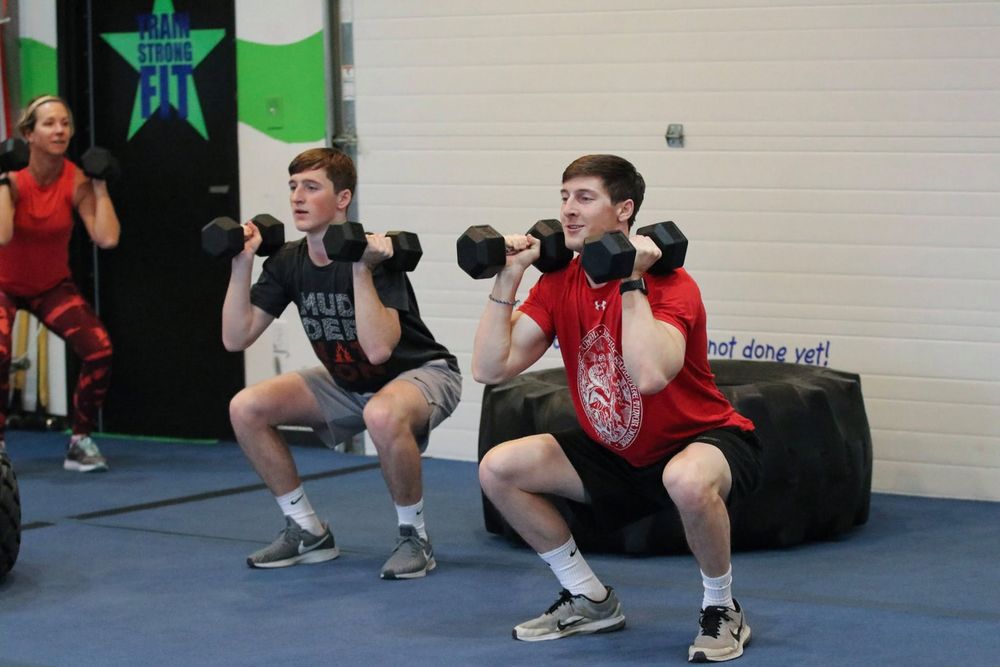
Your child loves sports. They enjoy competing, want to improve, and may have started asking about lifting weights.
But is strength training appropriate for someone who is still growing?
Young athletes can begin age-appropriate strength training when they can follow instructions, demonstrate basic movement control, and participate in a properly supervised program. There is no single birthday that makes every child ready.
The important questions are whether the training matches their physical development, whether qualified instruction is available, and whether the program emphasizes learning rather than lifting the heaviest weight possible.
At Train Strong Fit in Ashland, VA, the Youth and Sports Specific Training program is designed for middle and high school students, generally ages 12 to 18. The program focuses on foundational strength, coordination, speed, agility, and age-appropriate progression.
Here is what parents should understand before choosing a strength training program for their young athlete.
Is Strength Training Safe for Kids and Teenagers?
The short answer is yes, when the program is appropriately designed and supervised.
The American Academy of Pediatrics explains that children and adolescents can develop strength through resistance training with low injury rates when instruction emphasizes correct technique and qualified supervision.
Resistance training does not necessarily mean heavy barbells.
It can involve:
-
Bodyweight squats and lunges
-
Pushup variations
-
Resistance bands
-
Controlled pulling and pushing movements
-
Balance and coordination exercises
-
Appropriately selected external resistance
The objective is to develop physical skills progressively.
For younger participants, that may begin with learning how to squat, hinge, balance, land, and control their bodies.
For more experienced teenagers, resistance can gradually increase as their technique and capacity improve.
What About Growth Plates?
Parents sometimes worry that strength training will stunt their child's growth.
The American Academy of Pediatrics reports that properly designed resistance training programs have not been shown to negatively affect linear growth or growth plate health.
That does not mean all weight training is risk-free.
Poor supervision, inappropriate loads, unsafe equipment use, and excessive training can create unnecessary risks.
The distinction is between a developmentally appropriate training program and asking a child to train like an experienced adult.
Five Signs Your Young Athlete May Be Ready 💪
Instead of focusing only on age, consider these practical questions.
1. Can They Follow Coaching Instructions?
A young athlete should be able to listen, understand directions, and respond when a coach asks them to change a movement.
Strength training requires attention.
If a child is not ready to follow basic safety instructions, additional time spent developing general movement skills may be more appropriate.
2. Can They Perform Basic Movements With Control?
Your child does not need perfect technique before beginning.
Learning technique is part of training.
However, they should be able to participate in simple activities such as squatting, balancing, changing direction, and moving through an appropriate range of motion.
A qualified coach can identify which movements are suitable and which need modification.
3. Are They Interested in Participating?
Motivation matters.
A young athlete who enjoys learning new skills may engage more positively than someone who feels pressured to train.
Strength training should help young people develop confidence and a healthy relationship with physical activity.
It should not become another source of performance anxiety.
4. Is Qualified Supervision Available?
This is one of the most important considerations.
A coach working with young athletes should understand physical development, appropriate exercise progression, movement instruction, and safety.
The National Strength and Conditioning Association emphasizes that children are not miniature adults.
Their training should reflect differences in development, coordination, physical maturity, and training experience.
5. Does Their Schedule Allow Enough Recovery?
School, practices, competitions, homework, sleep, and other activities already place demands on young athletes.
Additional training should fit into that schedule rather than simply adding more work.
If your child is constantly exhausted, experiencing persistent soreness, or struggling to recover between activities, their overall workload deserves attention.
What Should a Youth Strength Training Program Include?
A good youth program should develop more than the ability to lift weights.
Train Strong Fit's youth training service specifically includes bodyweight strength exercises, speed and footwork drills, agility ladders, cones, dynamic balance activities, mobility, and gradual progression toward bands and light resistance.
These elements support a broader athletic foundation.
| Training Component | What It Helps Develop |
|---|---|
| Foundational strength | Ability to produce and control force |
| Balance and coordination | Body awareness and movement control |
| Speed and agility drills | Acceleration, deceleration, and changing direction |
| Mobility exercises | Comfortable movement through appropriate ranges |
| Warm-ups and cool-downs | Preparation and transition between activities |
| Progressive resistance | Gradually increasing strength demands |
A youth training program should also be engaging.
Young athletes benefit from learning, practicing, receiving feedback, and experiencing success as their abilities develop.
Why Technique Should Come Before Heavy Weights 🏋️
Imagine two hypothetical teenage athletes.
The first performs a squat with a heavy load but struggles to maintain control.
The second uses a lighter resistance, performs the movement consistently, and understands the coach's instructions.
Which athlete is demonstrating a stronger foundation?
The second athlete.
The objective of early strength training is not to prove how much weight someone can lift.
It is to establish movement skills that can support future training.
A thoughtful progression might begin with an unloaded movement, followed by improved coordination, then appropriate resistance as the athlete demonstrates readiness.
Train Strong Fit describes this progression in its youth program, moving from bodyweight exercises toward bands and light resistance.
That approach is consistent with the emphasis on technique and qualified supervision in the American Academy of Pediatrics guidance.
Does Strength Training Help With Sports Performance?
Strength training can contribute to athletic development, but it is not a substitute for practicing a sport.
A soccer player still needs soccer skills.
A basketball player still needs shooting, passing, and decision-making.
A baseball player still needs sport-specific technique.
Strength and conditioning provide physical qualities that can support those activities.
The National Strength and Conditioning Association recommends developing foundational strength and a broad range of movement skills rather than focusing too narrowly on one sport during childhood.
Train Strong Fit's youth program includes sport-specific drills for activities such as basketball, soccer, baseball, volleyball, and other sports.
Parents should think of this training as a complement to regular practice.
The goal is to help young athletes develop physical abilities while maintaining enjoyment of their sport.
How Often Should Young Athletes Strength Train?
There is no universal schedule for every child or teenager.
Training frequency depends on age, experience, sport participation, recovery, and total weekly workload.
The American Academy of Pediatrics describes supervised resistance training two or three times per week as a common approach for youth strength development.
However, that does not mean every athlete needs three additional sessions on top of an already demanding practice and competition schedule.
For example, consider this hypothetical week for a middle school athlete.
| Day | Activity |
|---|---|
| Monday | Supervised strength and movement training |
| Tuesday | Team practice |
| Wednesday | Rest or recreational activity |
| Thursday | Supervised strength and agility training |
| Friday | Team practice |
| Saturday | Game or competition |
| Sunday | Recovery and unstructured activity |
This is an illustration, not a prescription.
A child with multiple practices, weekend tournaments, or another sport may need a different schedule.
The goal is to balance skill development, physical preparation, and recovery.
Questions Parents Should Ask Before Enrolling 📋
Before choosing a youth strength training program, ask:
Who supervises the sessions?
Find out what experience and qualifications the coaches have working with young athletes.
How are exercises adapted?
A beginner and an experienced high school athlete should not automatically receive the same training demands.
How do you teach proper technique?
Ask how coaches introduce new movements and determine when resistance should increase.
How does training fit around team practices?
The program should account for the athlete's existing workload.
How is progress measured?
Useful measures may include movement quality, coordination, strength development, and consistent participation.
What happens when an athlete experiences pain?
A responsible program should have a clear process for stopping or modifying activity and referring concerns to an appropriate health care professional.
Is the environment positive?
Young athletes should feel comfortable asking questions, learning new movements, and making mistakes.
When Should Parents Seek Medical Guidance?
Most healthy young people can participate in age-appropriate physical activity.
However, certain circumstances require additional consideration.
The American Academy of Pediatrics recommends medical consultation before resistance training for young people with specific cardiovascular conditions, uncontrolled hypertension, uncontrolled seizure disorders, or certain medical treatment histories.
An athlete returning from an injury may also need individualized guidance from a qualified clinician.
Persistent pain, unusual fatigue, dizziness, or other concerning symptoms should not be dismissed as normal training discomfort.
A fitness coach can guide exercise technique and programming, but medical evaluation and rehabilitation decisions belong to appropriately qualified health professionals.
Frequently Asked Questions
Can a 12-year-old start strength training?
Potentially, yes. Readiness depends on the child's ability to follow instructions, movement skills, interest, and access to appropriate supervision. Train Strong Fit's youth program generally serves athletes ages 12 to 18.
Does strength training stunt growth?
Current evidence reviewed by the American Academy of Pediatrics does not show that properly designed and supervised resistance training stunts growth.
Does my child need to play a competitive sport to benefit?
No. Strength, coordination, balance, and movement confidence can benefit young people who participate in recreational activities as well as organized sports.
Should young athletes lift heavy weights?
The priority should be appropriate technique and gradual progression. Resistance should match the athlete's development, experience, and ability rather than an arbitrary performance target.
Build Strong Foundations Before Chasing Bigger Numbers
The best youth training program is not necessarily the one that looks the most intense.
It is the one that helps your child learn how to move, develop strength, build confidence, and enjoy physical activity.
For parents in Ashland, Hanover County, and the greater Richmond area, Train Strong Fit offers Youth and Sports-Specific Training for middle and high school athletes.
Explore the program to learn how its supervised strength, agility, coordination, and movement training may fit your young athlete's development and sports schedule.
